
Winter Scorpion Checks for Tucson Garages and Stored Boxes
Compare Tucson garage thresholds with sheltered boxes, firewood, and yard storage. Learn what to document when a scorpion appears in winter.
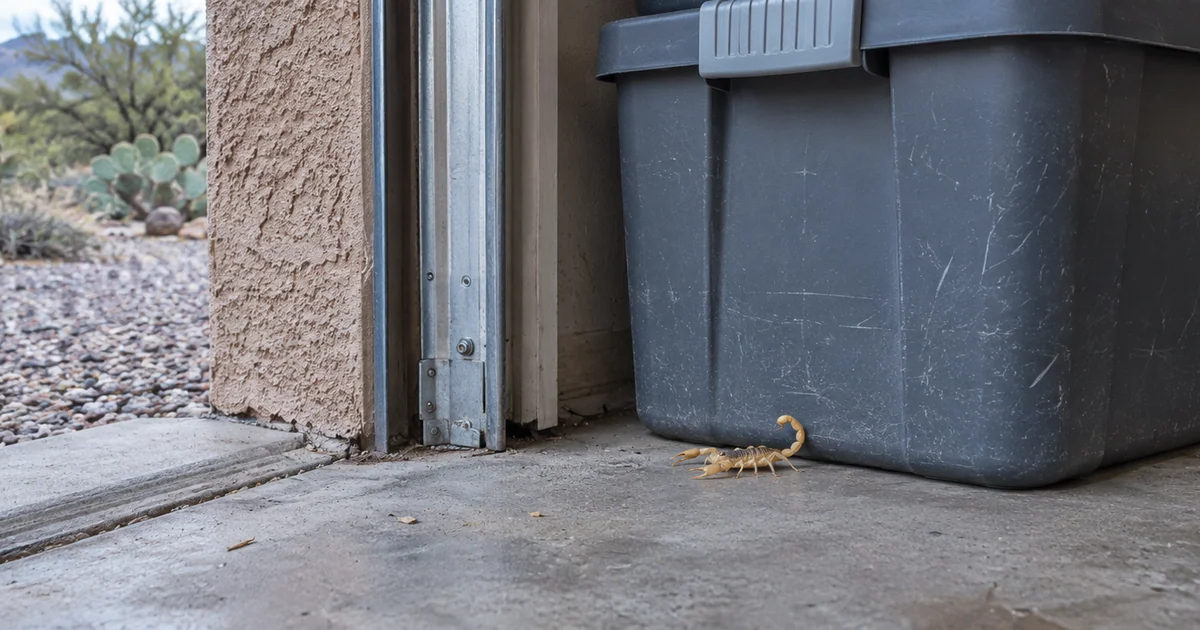
A scorpion seen after you move a box into a Tucson garage raises two practical questions. Where had the box been sitting, and have you seen activity near that threshold before? The answers help separate a carried-in sighting from a route at the edge of the building.
At a Rita Ranch home with a walled yard, map the side gate and attached garage separately. For a Sam Hughes property with a detached garage, record the route between the buildings and both sets of stored items. Report the exact place where the scorpion appeared.
What winter changes around scorpion shelter and garage entry
Cooler weather can change when you see outdoor activity, while sheltered places beside walls, wood, and stored materials remain worth inspecting. A single finding gives you a location to check and a date to compare with later observations.
- Garage bottom seal Start with a view that shows the surrounding area. Check whether this is close to where the signs first appeared.
- Firewood and boards Write down whether the condition is present every time you look or shows up after a regular activity.
- Seasonal storage totes Note any changes since the last time you used this part of the property.
Where to start in Tucson
Look from the outside of the storage area and check the garage door from a safe position. Avoid putting hands into dark corners, boots, or stacks. If the only sighting was on an object you carried inside, keep the object’s prior location in your notes.
Check from an accessible position without moving electrical appliances, pulling on pipes, or disturbing a hidden nest. Take a clear photo if you can do so safely.
Two patterns worth recording separately
Use a short note for each location. Include the physical feature closest to the evidence so someone can identify the same spot later. Record the exact place, time, and number of sightings. A repeat pattern provides better context for identification than a general room description.
- An isolated observation. Write down what happened before it appeared, including changes to weather, storage, or access. Keep the original date if you recheck later.
- Evidence in the same spot on different days. Return to the same accessible location, take a comparable photo, and record what changed. Use the pattern to decide what to ask an inspector.
Six places to check for scorpion shelter and garage entry
- Garage bottom seal Use daylight to check the closed door at its corners and compare them with the center. Photograph any gap from an accessible position.
- Firewood and boards Note where stacked material sits in relation to doors and wall edges. Look from the outside and leave hidden areas undisturbed.
- Seasonal storage totes Record which container changed locations and where it was kept. Inspect visible surfaces before moving additional items.
- Wall beside irrigation Look for sheltered edges and nearby insects. Describe the wall and the nearest watering point without reaching into gaps.
- Door between garage and living area Check the accessible lower edges and note which side of the threshold showed activity.
- Overnight exterior light Compare insect activity at the lit entry with other openings. Use dates to track whether later scorpion sightings are near the same point.
How to make the evidence easy to review
If you send photos, take one wide view that establishes the location and one close view that shows the evidence. A short description of surrounding surfaces can help the provider tell which area the photo represents.
- Wall beside irrigation in context Include the nearest fixed point in the picture so the location can be found again.
- Door between garage and living area and access Tell the provider which side you could see and which part needs another way in.
- Overnight exterior light on a later check Record any change between the first note and the next observation.
What to put in your winter inspection notes
- Exact location. Include a room or outside wall and the nearest door, cabinet, pipe, or other fixed point.
- First sighting. Write the date and approximate time and describe what you saw directly.
- Recent change. Record relevant changes in weather, repairs, deliveries, access, or use of the space.
- Inspection limits. Flag any area that requires a key, a manager, specialized equipment, or access you cannot safely arrange.
- Previous work. Save the dates and scope of relevant repairs, monitoring, or treatment.
A winter prevention plan
Record the carried-in route
Write down the object, its previous location, and where it was opened. If a second sighting occurs along a door instead, log it as a separate event.
Make stored equipment easy to inspect
Keep frequently moved items in accessible containers. Avoid reaching into hidden space when moving materials that may contain a scorpion.
Confirm how the seal meets the floor
Ask about repairing a visible threshold gap, then compare your photo after the repair. Include the nearest wall seam if the gap extends beside the door.
Review findings across different conditions
Use the same labels for sightings after weather changes or after moving equipment. Share a safe photo and location if activity repeats.
Mistakes that make winter signs harder to trace
- Changing several things at once. Keep track of each repair or cleaning step and the date it happened so you can compare later observations.
- Checking only at the first sighting. Repeat the check after the relevant weather or activity has changed. A second look helps show whether the condition persists.
- Losing useful context. Keep a record before cleaning or moving objects. Dated observations make it easier to compare the same location under similar conditions later.
- Assuming adjacent rooms have the same issue. Write separate notes until you have a reason to connect them, such as a shared opening or a visible trail.
When a home inspection makes sense
An inspection can help when signs repeat, the route is unclear, or the area requires access you cannot safely arrange. Share your notes and ask what the provider can inspect, what will be documented, and when follow-up is appropriate.
For identification and prevention details, see the University of Arizona scorpion guide.
Frequently asked questions
Can a scorpion turn up even when winter nights are cooler?
A sighting can occur in a sheltered area or after an item is moved. The setting and repeat pattern matter more for the inspection than the season alone.
Should I move every box to find the source?
Start with the visible edges and the specific item you moved. Arrange help if the areas you need to inspect are dark, cluttered, or unsafe to reach.
What details help distinguish a garage route?
Several sightings near the same opening, photos of a visible gap, and notes on when doors are used help focus the check.
What if the evidence is on the other side of a shared wall?
Document the part within your own space. Ask the owner or manager how to arrange access before work is requested outside the unit.
What should a written service proposal cover?
Ask for the identified issue, the locations to be inspected or treated, what to prepare, and any expected follow-up.
Get help with scorpion control in Tucson
Share the date of the winter observation and whether it changed after normal use. Include the finding and check coverage for the relevant ZIP.
Read the Scorpion Control service page. See the Sam Hughes guide or send an inquiry.