
Why Crickets Get Inside Tucson Homes
Track nighttime chirping to a likely entry route. Learn how lighting, door seals, moisture, and storage affect cricket activity around Tucson homes.
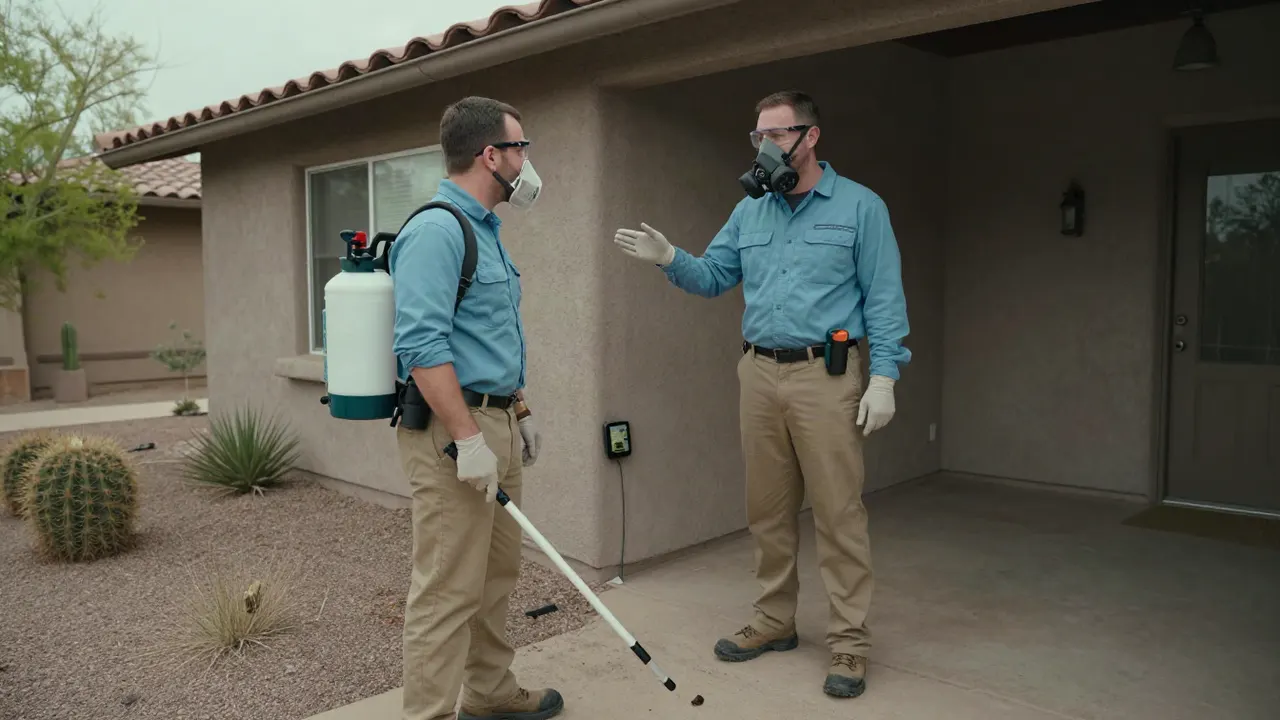
After monsoon rain, compare chirping near the side yard with sounds near the garage slab. Check the door corners, exterior light, and damp storage separately. Stucco, block walls, garage slabs, and attached patios can create several separate transitions. Describe the closest transition and whether it is accessible from inside, outside, or both.
Repeated chirping around a garage or utility room gives you a useful place to start. Note the time, which outside lights are in use, and whether any door near the sound is often open at dusk. Then look for the physical routes below.
Why crickets enter homes and garages
University of Arizona Cooperative Extension’s cricket management guide discusses household cricket activity and practical ways to reduce it. At an individual property, the relevant clues often include shelter, moisture, light, and an accessible entrance.
Look for three connections before deciding where activity starts:
- An outside gathering point. Check where insects collect on the patio or near the garage after dark.
- A suitable opening. An uneven garage seal or screen gap can sit close to the gathering point.
- Protected indoor edges. Storage and wall edges can shelter crickets after they are inside.
Write down the strongest evidence first. A visual sighting or monitor capture near a threshold can help confirm the route suggested by the sound.
How Tucson properties differ after sunset
A light directly over a side door can concentrate insects within a short distance of the threshold. A fixture farther from the entrance may create a different pattern. Observe both with the doors closed before deciding which location is relevant.
Attached garages are a useful place to compare indoor and exterior activity. Sound can carry into a hall or utility space from behind a wall or beside the door. Check the large garage opening and the door to the living area.
Water use also varies. A sheltered corner can stay damp after watering or a slow leak, even when the rest of the driveway dries quickly. Compare that spot with where you have actually seen crickets.
If you live near one of the areas on our Tucson locations page, provide your specific layout and ZIP code when you ask about availability.
Outdoor chirping and a cricket inside the structure
Crickets outside can be easy to hear through nearby openings. A confirmed sighting indoors gives stronger evidence than sound alone.
Use these two patterns to decide where to check first:
- Sound strongest by a window or exterior door. Listen on both sides and look at the threshold, screen, and lit area outside.
- A confirmed cricket along an indoor wall. Look at the nearest threshold and protected edges. Note whether activity is in an attached garage or a living area.
Record the point where you heard it separately from any confirmed sighting. This can prevent spending time on a room that only carries the sound from elsewhere.
Six routes to look at when chirping repeats
Start with a visual check of outside openings and move toward the rooms where you hear activity. Photograph gaps when they are easy to see.
- Garage door bottom seal. Close it and compare the center with each lower corner.
- Door from garage to house. Look for light and check whether the door closes without pressure.
- Patio sliders and tracks. Check the corners and confirm that screens meet their frames.
- Accessible wall openings. Look at visible gaps near pipes, floor edges, or a wall close to the sound.
- Storage beside an exterior threshold. Check the open area around bins and avoid handling concealed objects blindly.
- Any damp area close to a route. Look around irrigation, a hose bib, or a utility corner and document when it stays wet.
If a known gap is repaired, retest that exact door. A seal can fit the middle perfectly while a corner or neighboring screen still leaves a route.
What makes a cricket problem recur
Several conditions can overlap near an entry. Focus on the combination that matches both your sightings and the layout of the building.
- Exterior lighting at close range. Insects may gather beside the door where people enter.
- Worn or uneven seals. A low corner can stay open when the rest of the door looks closed.
- Moisture near a wall. Check sheltered spots that remain damp after watering or drainage.
- Leaf litter and storage. Cover close to the building can hide activity you miss from the driveway.
- A second opening. A patio screen or side door may explain continued activity after repairing a garage seal.
For an assessment, Cricket Control in Tucson explains how the scope changes with the location and evidence.
How to document nighttime activity
Use a simple log for a few comparable evenings. Write down observations before you adjust the lighting or repair a sweep so you have a starting point.
Include these six items when practical:
- Time sound begins. Record how long the chirping continues.
- Closest doorway. Write whether it is a garage, side door, or patio slider.
- Actual sightings. Note the place you saw a cricket rather than where you heard one.
- Lights and door use. Record which fixtures were on and which doors opened.
- Water conditions. Write down irrigation or visible dampness beside the wall.
- Recent repairs or changes. Mention new sweeps, adjusted lighting, or moved storage.
The log will still be useful if the sound stops for a night. Compare several observations around the same time instead of assuming one quiet evening proves a permanent change.
A practical plan to reduce cricket entry
Start with a route you can confirm and choose adjustments that are easy to revisit. Several small changes can be easier to evaluate when you record each date.
Check and fit door barriers
Verify that the door closes evenly and address worn seals or screens. Pay particular attention to bottom corners.
Review the light closest to the entry
Compare fixtures based on where insects actually gather. If possible, adjust when it runs or move emphasis to a fixture farther from the opening.
Dry the damp areas you can identify
Fix or report leaks, adjust obvious overspray where appropriate, and monitor corners that remain damp.
Recheck sound and sightings separately
Listen on both sides of the entry and look for confirmed activity near the same wall. If the sound continues from another location, add a new note.
If you are seeing scorpions near the same spots, see the scorpion garage guide for a separate set of entry and shelter checks.
Common mistakes when trying to locate chirping
It is easy to focus on the loudest room. A better starting point is where the sound, a sighting, and an actual route overlap.
Avoid these shortcuts:
- Treating the loudest room first. Check adjacent spaces before assuming the sound is coming from that room.
- Inspecting the center of a seal only. Measure the two ends and confirm the door closes squarely.
- Moving a light without a baseline. Note where insects gather before and after the change.
- Ignoring a nearby damp corner. Observe when it gets wet and whether insects actually appear there.
- Replacing one barrier and stopping there. Check screens and adjoining doors if activity continues.
When to ask for a cricket inspection
Ask for help if you confirm repeated activity inside, have chirping that you cannot trace to a safe inspection area, or notice insects returning after a known entry repair. Include the way the sound and sightings differ.
The Cricket Control page lists the scope and pricing factors. Share your inspection notes and ZIP code through the contact form.
Frequently asked questions
Why do I hear crickets at night in my Tucson home?
Activity can be easier to hear once the household is quiet. Compare both sides of nearby doors and check garages, patio thresholds, and sheltered floor edges to locate it.
Can outside lights draw crickets toward a door?
Crickets and other insects can gather around some night lighting. Note where they collect and how close that spot is to the threshold.
Will a new door sweep solve the problem?
A well-fitting sweep helps when a confirmed route runs under the door. Also check the corners, screens, adjacent openings, and any nearby moisture or shelter.
How is a cricket control quote set?
The quote depends on where activity is confirmed, inspection and access requirements, repairs, and whether the plan includes follow-up monitoring.
What should I do if the sound moves to another room?
Log the new room and then inspect likely paths connected to it. Compare the time and nearest openings with your original observation before treating the new room as a separate source.
Get help with cricket control in Tucson
During the monsoon, write down whether a sighting followed rain or also happens during dry weeks. Check sheltered points near doors and wet areas next to soil or hardscape. Share the finding and check coverage for the relevant ZIP.
Read the Cricket Control service page. See the Sam Hughes guide or send an inquiry.